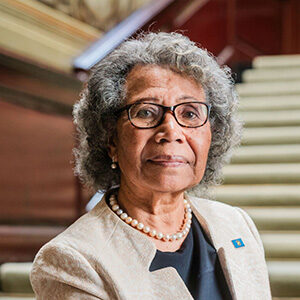
The Pacific people depend very much on their environment. The soil, the forests, the ocean. Our ancestors had great respect for these as givers of life. My childhood memories include not being allowed to throw sugarcane or banana peels in the forest as that would be disrespectful to the other owners of the forests who were invisible. These beliefs allowed for conservation and protection of forests which are the lungs of the earth. Sadly, the global demand for timber threatens the role forests play in planetary security.
But today, we are not just celebrating artistic excellence; we are recognizing the profound utility of creativity.
Nowhere is this more evident than in the Commonwealth Short Story Prize. This Prize is more than a competition; it is a channel which unites us as people of the Commonwealth. The Prize celebrates established writers and uncovers emerging talent, creating a space where boundaries dissolve, and shared humanity takes centre stage.
In the last two years, the Commonwealth Foundation received more than 7,000 short story submissions each year. Beyond the sheer quantity of these submissions, it is the diversity of the narratives that reflects the continued relevance of creative expression.
Stories are a powerful reminder of the breadth of voices, perspectives, and cultural experiences within the Commonwealth. Each story takes us through a journey inside the writer’s mind, but it also acts as a mirror that reflects our own lived experiences.
This is why storytelling is vital in the work that we do. It serves as a bridge across cultures and generations, and a catalyst for empathy and understanding.
When considering ‘Art with Purpose,’ we must go one step further. We must ask: How do these stories serve the safety and resilience of our planet?
Short stories act as vital training grounds for human resilience. They allow us to simulate survival, to navigate crises, and to imagine solutions before they manifest. A story can warn us of what we stand to lose, transforming abstract concepts such as ‘climate change’ into a tangible, emotional reality.
The safety of our planet depends on our ability to care for neighbors we have never met and landscapes we have never seen. Literature breaks down the apathy that threatens our environment. By engaging with these narratives, we are not just reading; we are building the emotional stamina required to protect our shared home. Through short stories, we can deepen connections, inspiring writers and readers to realize their power to create change.
It is through the diversity of our stories that we also preserve histories and realities, share our dreams, and build a shared future, exemplifying the power of art with purpose.
Art in its varied forms occupies a place of importance in the Pacific. Visual art including, painting, carving, weaving, body art, music, chanting, and dance, are very important to the people of the Pacific. Body art or tattoos, define people’s origins and beliefs, as do songs, and dances. All these tell stories. Colonialism discontinued most of these in the Pacific but they have re-emerged in living generations as we gained maturity to be ourselves.
These different art forms on the one hand, represent our diversity across the region, but also bind us through understanding and mutual respect. Our similarities and differences are woven together in a colorful mat which keeps us together and protects us in times of uncertainty. It could be said that art and music are great ambassadors within our region and to the world.
To conclude, let us remember that creativity is not merely a decoration, but also an important catalyst for justice, understanding, and hope, linking global citizens through shared stories and imaginative empathy.