On December 5th, 2025, a conference took place titled “The Global Peace Offensive – The Challenges to Peace in the Black Sea and the Role of the Tatars for a Future Based on Security, Trust & Cooperation.”
The event was organized by the Black Sea University Network (BSUN) in partnership with the World Academy of Art and Science (WAAS), and was held in a hybrid format , with the logistic support of the Constanta County Council (Romania) and Constanta County Library marking the celebration of the National Day of the Tatar Ethnic Community in Romania, that takes place every year on December 13th.
The Office of the High Commissioner on National Minorities (HCNM) of the Organization for Security and Cooperation in Europe (OSCE) and the Centre of Excellence for the Studies of Transborder Minorities (CESMINT) participated in the closed-door event jointly with the Global Peace Offensive Center (GPOC).
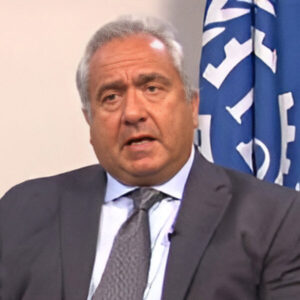
Garry Jacobs, WAAS President, in his opening remarks, highlighted the importance of focusing on innovative strategic initiatives, such as the ones proposed by the Global Peace Offensive, a strategy that present viable pathways for resolving protracted crises at the local, regional and global level.
Prof. Eden Mamut, BSUN Secretary General, presented relevant aspects of the history of the Crimean Peninsula and the territories associated with the former Crimean Khanate (1441 – 1783), its geopolitical implications, as well as the struggle of almost 4 centuries of the Crimean Tatar population to survive and have access to their fundamental rights for existence and a decent life.
Relevant issues related to the current context of war in the region and the principles on which sustainable peace in the Black Sea region should be based were discussed by participants.
The atrocities to which members of the Crimean Tatar community were subjected both under the Tsarist regime and the Soviet Union and more recent times were evoked. It was noted that more than 1 million citizens of the Russian Federation have been resettled in Crimea after the occupation of the peninsula in 2014 by the Russian authorities.
The discussions emphasized that a long-lasting peace is attainable only through the involvement in the dialogue the indigenous people communities and with all given consideration to the Crimean Tatars claims and aspirations, being the largest indigenous population group in Crimea, represented by the National Parliament of Crimean Tatars.
Garry Jacobs remarked that “Despite the adversities outlined above, Tatar communities have demonstrated remarkable resilience and have spearheaded cooperative, trust-building initiatives that offer hope for a more peaceful future”.
It has been mentioned by the distinguished speakers, on numerous occasions, that peace must become the goal of all responsible parties and that in the current context of the evolution of human society, peace can be founded only on the principles of human security and with the establishment of effective guarantees from international institutions.
The concept of human security refers to the “right of people to live in freedom and dignity. All individuals, and in particular vulnerable people, are entitled to freedom from fear and freedom from want, with an equal opportunity to enjoy all their rights and fully develop their human potential” (UN General Assembly Resolution 66/290, 2012).
The academic community, experts, researchers and teachers, can make a major contribution to the development of solutions for the implementation of these principles.
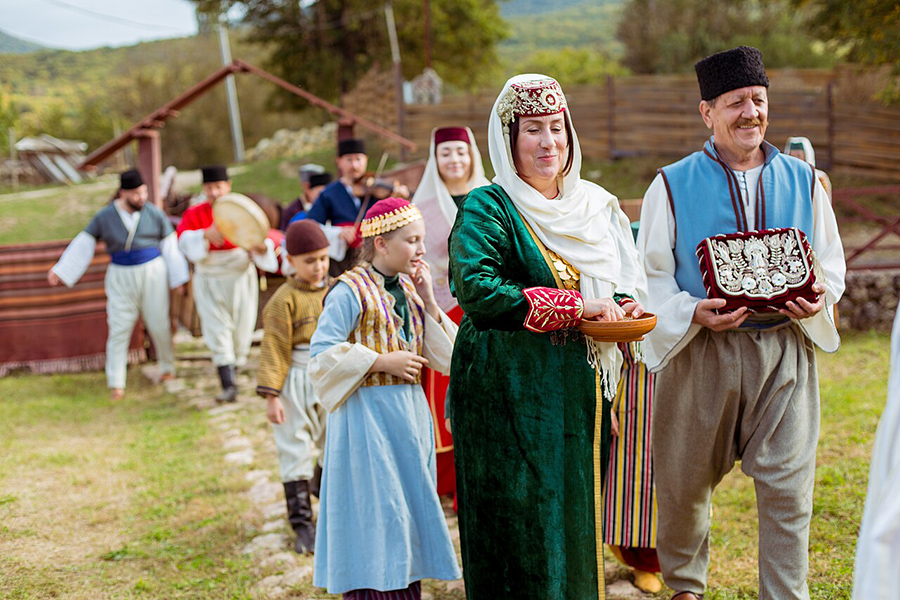
Garry Jacobs emphasized the importance of localized solutions and said that “WAAS , in furtherance to its Global Peace Offensive is ready to work with BSUN, the Tatar communities, and every partner to build a Black Sea defined not by confrontation but by cooperation.” The Tatars’ shared heritage – he remarked- is not only part of the region’s past but can become a foundation for a peaceful future.
Donato Kinger Passigli, WAAS Vice President, concluded the conference emphasizing that the Tatar communities, displaying remarkable resilience throughout persecutions, repressions and exclusions, are a minority capable of acting as a bridge among conflicting parties in a people-driven peace process.
The Tatar communities already possess many of the ingredients necessary for bottom-up peacebuilding. By supporting their networks, amplifying their successful practices, and integrating their knowledge into broader regional strategies, the Global Peace Offensive can help transform separate initiatives into a coherent peace architecture. This architecture would be rooted in dignity, cultural identity and cooperation.
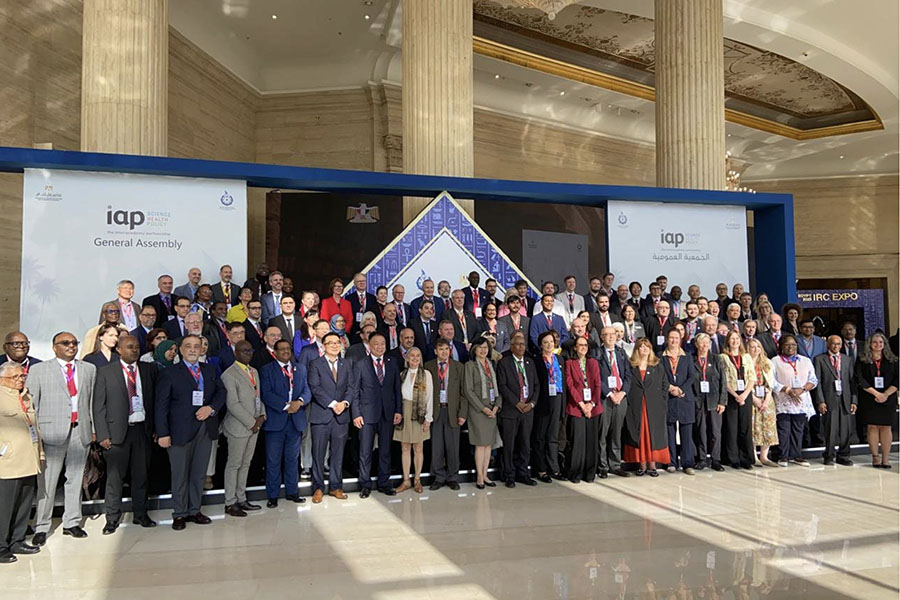
The event was attended by representatives of the Tatar communities in Romania and Ukraine, the OSCE, the World Academy of Arts and Sciences (WAAS), the universities of Ankara, Kiev, Bucharest, Maribor, as well as the UN University for Peace, experts, high-ranked officials from international bodies, diplomats and journalists.
The attendees in the “Ion N. Roman” auditorium of the Constanta County Library had the possibility to follow the online speeches by renowned specialists and officials joining the Conference from Kiev, Ankara, Maribor, Florence, The Hague, Chennai and New York.
For further information please contact: Prof. Eden Mamut : emamut@bsun.org or Donato Kiniger: kiniger@worldacademy.org